
English
Views: 30013 Author: Site Editor Publish Time: 2024-01-28 Origin: Site
Can Laser Cleaning Remove Graffiti?
Yes, laser cleaning is an effective and innovative solution for removing graffiti, offering numerous advantages over traditional cleaning methods. While Laser Blasters can significantly speed up the graffiti removal process, they also ensure the preservation of the underlying surface, a feature that is not always guaranteed with conventional techniques like sandblasting or chemical cleaning.
Laser cleaning works by directing highly concentrated beams of light at the graffiti surface. The intense energy from the laser is absorbed by the paint or ink, causing it to evaporate or ablate. Unlike traditional methods, laser cleaning does not rely on abrasive materials or chemicals, making it an environmentally friendly and non-destructive option. This makes it particularly beneficial for graffiti removal on sensitive surfaces, such as stone, brick, or painted walls, where preserving the integrity of the material is critical.
No Surface Damage:
One of the biggest concerns with traditional graffiti removal methods, such as sandblasting or scrubbing, is the risk of damaging the underlying surface. Sandblasting, in particular, can erode softer materials and is unsuitable for historic buildings or delicate structures. Laser cleaning, on the other hand, is gentle on the surface while still effectively removing the graffiti, making it ideal for heritage sites, monuments, and old buildings.
Precision and Control:
Laser cleaning provides precise control over the cleaning process, allowing operators to remove only the unwanted graffiti without affecting the surrounding area. This level of precision is particularly important when dealing with intricate surfaces or textured materials, such as stone carvings or murals, where traditional cleaning methods can cause unintended damage.
Environmentally Friendly:
Unlike steam or chemical cleaning, laser cleaning produces no waste or toxic runoff. It eliminates the need for harmful chemicals, reducing the environmental impact of the cleaning process. For businesses and municipalities seeking sustainable cleaning solutions, laser cleaning offers a safe, eco-friendly alternative.
Time Efficiency:
While laser cleaning can be a relatively time-consuming process compared to simple steam or chemical techniques, it is still significantly faster than older methods like sandblasting, which often require extensive setup time and post-cleaning procedures. Laser cleaning machines can work continuously and with minimal downtime, offering efficiency and high performance, especially on large graffiti-covered surfaces.
No Chemical Residue:
One of the drawbacks of using chemical graffiti removers is the potential for harmful residue left behind on the surface, which can lead to staining or further damage. Laser cleaning eliminates this issue entirely, leaving no chemical residues or residues that could attract new dirt or grime.
Suitable for Historical and Sensitive Structures:
Graffiti removal from historical buildings or cultural heritage sites often requires special care to prevent damage to valuable materials. Laser cleaning offers a non-invasive method that preserves the original surface, ensuring that no further deterioration occurs during the removal process. This makes it ideal for cleaning graffiti on historic monuments, cultural landmarks, and other sensitive areas.
While laser cleaning offers numerous advantages, it is not a one-size-fits-all solution. The process can still be relatively lengthy, particularly when dealing with large areas or thick layers of graffiti. The effectiveness of laser cleaning can also vary depending on factors like paint type, surface material, and the age of the graffiti. Additionally, laser cleaning equipment can be an investment, and depending on the size of the job, it may require professional operation or rental, which can add to the cost.
Steam Cleaning:
Steam cleaning is a popular method used for removing graffiti, as it relies on hot steam to break down the paint. However, steam can sometimes struggle with stubborn graffiti and may require multiple applications. It can also be less effective on porous materials, where graffiti has seeped deep into the surface.
Chemical Cleaning:
Graffiti removal via chemicals is fast but comes with its own set of drawbacks. Harsh chemicals can be toxic and harmful to both the environment and the materials being cleaned. Additionally, some chemical solutions may leave behind unwanted residues that can damage or discolor the surface.
Sandblasting:
Sandblasting is effective for removing graffiti from hard surfaces, but it comes with a significant risk of surface damage, especially on softer stone or delicate materials. This makes sandblasting a poor choice for historical buildings or fragile structures, as it can cause long-term deterioration.
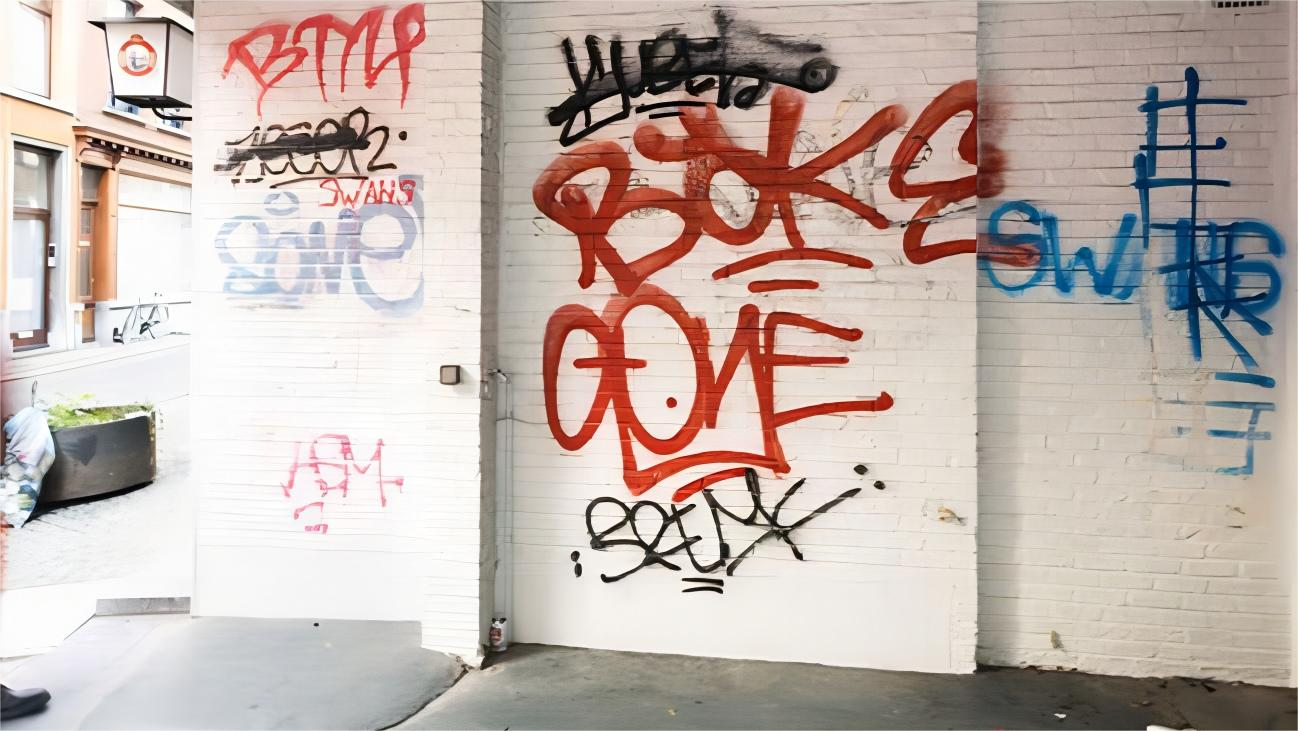
Laser cleaning is the modern solution to graffiti removal, offering superior efficiency, precision, and safety for both the environment and the underlying surfaces. While it may take more time than traditional chemical or steam methods, it remains the safest and most effective option for preserving the integrity of buildings, especially for historical and delicate materials.
Whether you're managing urban spaces, heritage sites, or commercial properties, investing in laser cleaning technology ensures a cleaner, more sustainable solution to graffiti removal with no damage to the structure or environment.
There are so many ways to clean graffit,such as:repaint,sand cleaning,dry ice etc But laser cleaning is more effective and save labor cost.laser cleaning life span could reach 10 years without any consumble parts.Laser cleaning is very suitable for removing graffiti. The laser beams will quickly heat up the paint layer, which then will evaporate. The underlying stone or concrete layer remains cool because of its higher ablation temperature. So the laser beams will have no effect on the underlying stone or plaster layer. Even on wood or glass, paint can be removed!
There are two types of laser cleaning machine: Continuous type and pulse type.Which type would be the best for graffit cleaning ?
Continuous laser cleaning machines use high-temperature burning to clean dirt, while pulse laser cleaning machines use oscillation to break down dirt. Therefore, pulse laser cleaning machines cause relatively less damage to the substrate. Additionally, the price difference is quite significant.
This technique has been available for about ten years. It existed before, but was prohibitively expensive for graffiti removal back then. The big advantage is that only light is used and that this light has no effect on anything other than graffiti paint. With the correct setting of the machine, the laser beam will reflect on the underlying layer and therefore have no effect on it. This makes laser cleaning very suitable for sensitive surfaces, old buildings, other paint or paint, etc. Laser cleaning is very environmentally friendly because there is no consumable material, such as sand or dry ice, that remains after the works. This also makes laser cleaning a very practical solution: it is whisper quiet, does not require heavy shields or protective suits and does not leave any dirt behind. A few years ago, laser cleaning was still an expensive solution, but today the prices are comparable to chemical removal or sandblasting. The perfect solution for surfaces smaller than 100m².
So if your budget is not enough, continous type is much more cheaper. while pulse type is more expensive.if your budget is enough,then SMARTECH PULASE LASER CLEANING MACHINE would be the best choice for graffiti cleaning.